Contact Database Decay Rates and Refresh Frequency
Job titles and emails decay fastest, making field-level refresh essential.
Contact data does not wear out the way a part wears out. It breaks the moment the person behind the record changes jobs, and that moment occurs constantly, not seasonally. Bureau of Labor Statistics figures recorded millions of U.S. quits in a single month, June 2026, and every one of those quits turned a working contact record into a wrong one on that specific day. Median employee tenure has fallen to 3.9 years, the lowest reading since 2002, showing that the churn feeding this problem is the baseline condition of the labor market and is worsening.
A record that goes bad does not look any different from a record that is still good. A stale cell and a correct cell sit side by side in a CRM with no visual distinction between them. Nothing flags the rot until someone dials the number, sends the email, or routes a deal to a person who no longer holds that title, and by then the damage has already happened. That invisibility is what makes decay so easy to underestimate. It does not announce itself the way a system outage does. It piles up quietly, record by record, until a campaign or a territory plan runs into the unreliable portion of the list at scale, and the cost becomes visible all at once.
How fast each field type decays
The decay rate most people repeat treats a contact record as one thing aging at one speed, and that framing hides more than it reveals. The commonly cited aggregate figure, drawn from MarketingSherpa's monthly measurement and reported by HubSpot as an industry benchmark, describes the average decay across every field in a record. It was never meant to describe any single field on its own, and treating it that way leads teams to badly misjudge where the real risk sits.
Break the record apart by field and the picture changes fast. Job titles decay faster than almost any other common field, both month to month and over a full year, because titles change with promotions, reorganizations, and lateral moves that have nothing to do with someone leaving a company. Direct-dial phone numbers fail even faster in practical terms, since a number is tied to a specific desk and role, so one job change kills the line even though the person is still reachable on a mobile number nobody has captured. Business email addresses decay at roughly 3.5% a month, because IT deactivates a work inbox within days of someone's last day, sometimes within hours. Company address moves much slower, driven mostly by office relocations and mergers. Stable identifiers like legal company name, founding year, and broad industry classification barely move at all, and can be treated as close to permanent for planning purposes.
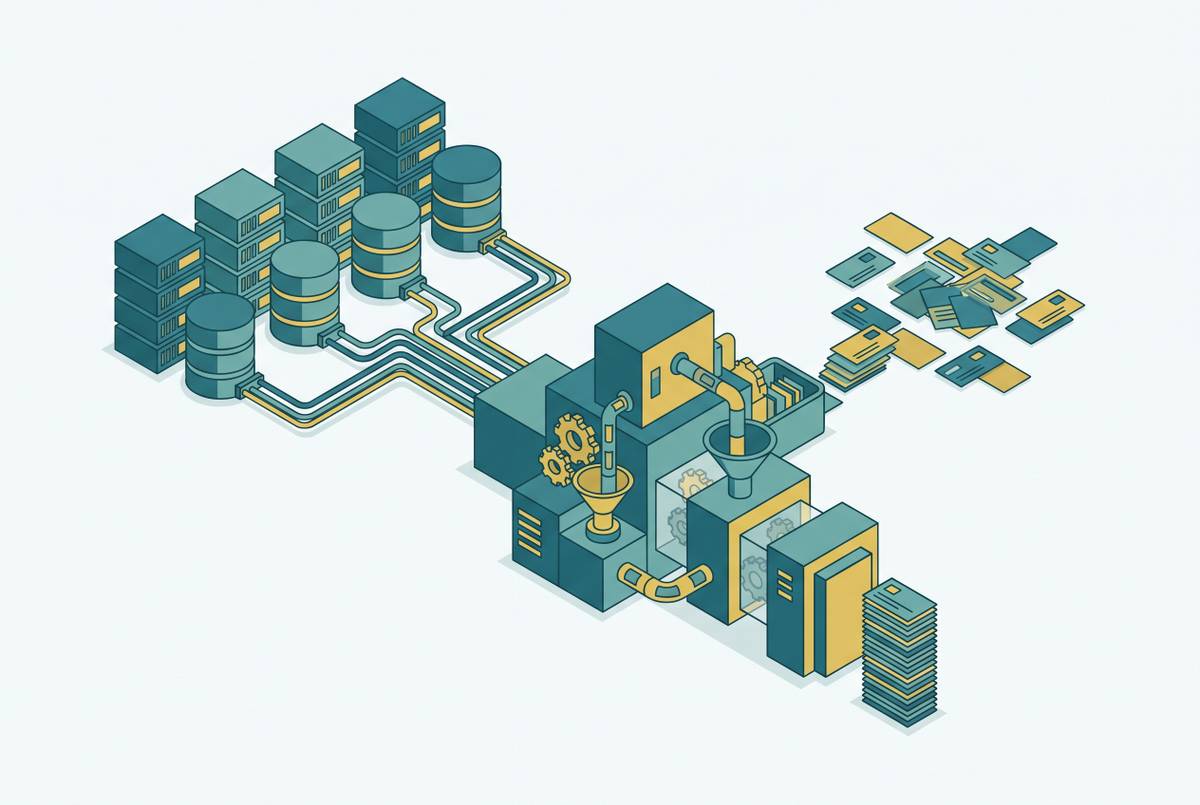
A contact database is a portfolio of fields, each splitting every month into a portion you can still trust and a growing portion you cannot, and field-level measurement is the only way to tell which record has landed on which side. The annual blended figure is not inaccurate, it is just answering a narrower question than people assume, namely how much of a full record is wrong after twelve months, while staying silent on which specific fields a sales team is actually relying on to get an email opened or a call picked up.
How decay rates shift by industry and seniority level
Field type is one axis of variation. Industry is the other, and it cuts just as deep. Dun & Bradstreet benchmark data shows annual decay rates spreading widely across sectors. Startups and VC-backed companies sit among the highest decay rates of any segment, which makes sense given how often early-stage companies restructure, rename, and lose staff to competitors or to their own cap tables resetting. Technology follows closely behind, driven by the same high mobility. Healthcare runs high as well, since physicians switch practices, administrators rotate, and department heads change with some regularity. Professional Services shows moderately high decay. Financial Services is at a moderate level. Manufacturing runs relatively low, and government shows the lowest decay rate among the segments tracked, consistent with longer average tenures and fewer structural reorganizations in the public sector.
A sector's turnover rate explains most of this spread. SaaS and broader technology companies see decay outpace the general baseline because people in those industries change roles more often and companies restructure teams more frequently than in slower-moving sectors. Geography adds a further wrinkle: tracking from 2026 found that VP- and C-suite contacts in the UK changed roles at a materially higher rate than their U.S. counterparts over the same twelve-month window, which suggests that decay benchmarks need to account for market, not just industry.
A team selling into government or manufacturing might read this and conclude that less frequent refresh is safe. That conclusion only holds at the company level. Title and email fields still decay inside stable sectors even when the company itself is not changing, because individual careers move regardless of how static the employer looks from the outside. The field-type logic from the previous section still governs refresh decisions even where the industry-level numbers look reassuring.
The cost of stale records across deliverability, pipeline, and AI workflows
Decay's cost does not arrive as one clean failure. It moves through an organization in stages, starting with deliverability, spreading into wasted selling time, and ending in corrupted AI output, with each stage making the next one worse. A bounced email does not just fail to land in one inbox. It damages sender reputation for every future send from that domain, and a domain that crosses a critical bounce threshold can be blacklisted outright, which suppresses delivery of mail that would otherwise have reached perfectly valid addresses. Validity's 2025 deliverability benchmark sets a baseline inbox placement rate for senders who follow permission-based practices, and that baseline is the best case. A list degraded by stale addresses starts from that point and only gets worse from there. Email platforms have also stopped warning senders and started enforcing limits directly: HubSpot's suspension policy means a free-account sender whose bounce rate crosses the threshold cannot get the suspension lifted, because the platform is policing list quality rather than protecting a sender stuck with a bad list.
Past deliverability, decay eats selling time directly. SDRs lose roughly 27.3% of potential selling time to bad data, the equivalent of a full working day each week spent chasing dead ends and outdated accounts. That repeated friction has a second-order effect on the CRM itself: once reps notice that contacts keep turning out to be gone, they stop trusting the system and start verifying independently, checking company websites, scanning LinkedIn, keeping private spreadsheets. At that point the CRM has quietly stopped functioning as the system of record, and nobody has filed a formal note saying so.
Segmentation breaks the same way, just less visibly. Job function, seniority, and account ownership fields decide which automated workflow a contact drops into, so when those fields go stale, routing fails without triggering any alert. A contact who moved from marketing into sales keeps receiving marketing nurture content, the automation logs the send as successful, and the message reaches the wrong person every time with no error anywhere in the system.
The sharpest version of this risk is new. As selling shifts toward AI-orchestrated outreach, what used to be a productivity drag becomes an amplification risk. A decayed record in a manual workflow costs one rep one bad call. The same decayed record inside an automated AI sequence fires personalized outreach at scale and at speed, producing thousands of tailored errors before a single human reviews any of it. Gartner predicts that most organizations will abandon AI projects that lack AI-ready data, and at large financial institutions, data quality is the most commonly cited obstacle standing in the way of production AI. That Gartner figure is the most cited benchmark in the field, though it describes data quality broadly rather than contact records specifically, and traces back to a particular survey population rather than a universal measurement, a caveat worth keeping in mind given how often large-dollar decay cost figures get repeated well past what their original methodology supports. Stale data does not stop at broken outreach. It corrupts the training signal and the inference inputs for every AI layer built on top of the CRM. The damage compounds quietly inside systems built to run without a human checking each output.
Why periodic cleanup lags decay
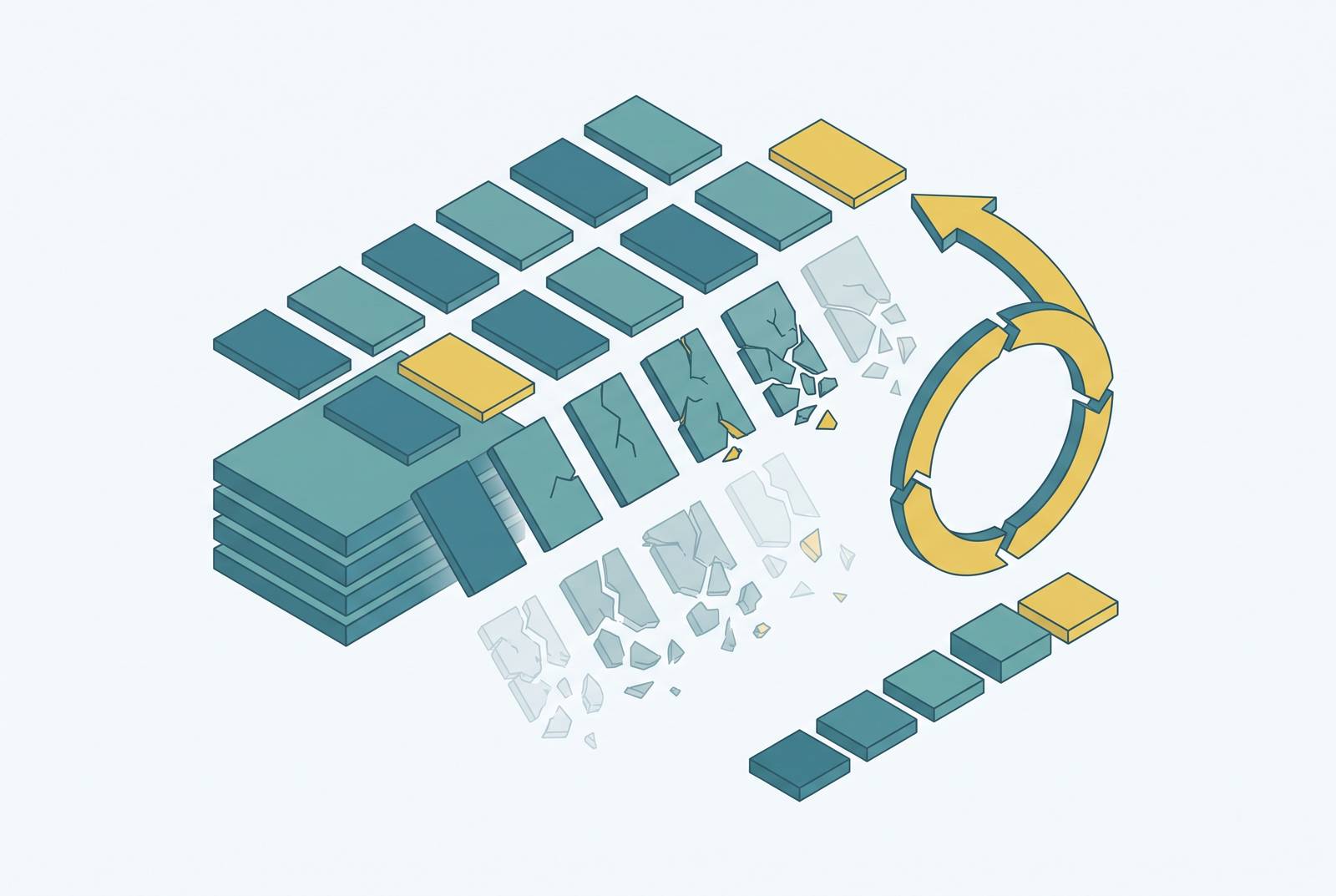
Scheduled cleanup fails for a structural reason, not an execution one. It treats a continuous problem as if it were a fixed one. Cleanup happens on a calendar. Decay happens every day. That mismatch guarantees a gap between the two, and the gap widens steadily between every cleanup cycle no matter how carefully the team runs the process.
A quarterly cleanup fixes what was wrong on the day it ran, but a meaningful share of those same records starts decaying again within weeks. The database is most accurate on cleanup day and steadily less accurate every day after that, bottoming out right before the next cycle starts. Annual snapshots have an even deeper flaw: they miss churn that happens and reverses inside the same year. A contact who changes roles in February and changes again in October looks perfectly stable in a December snapshot, even though the record was wrong for most of the year in between. The snapshot approach systematically understates how much the database actually rotted.
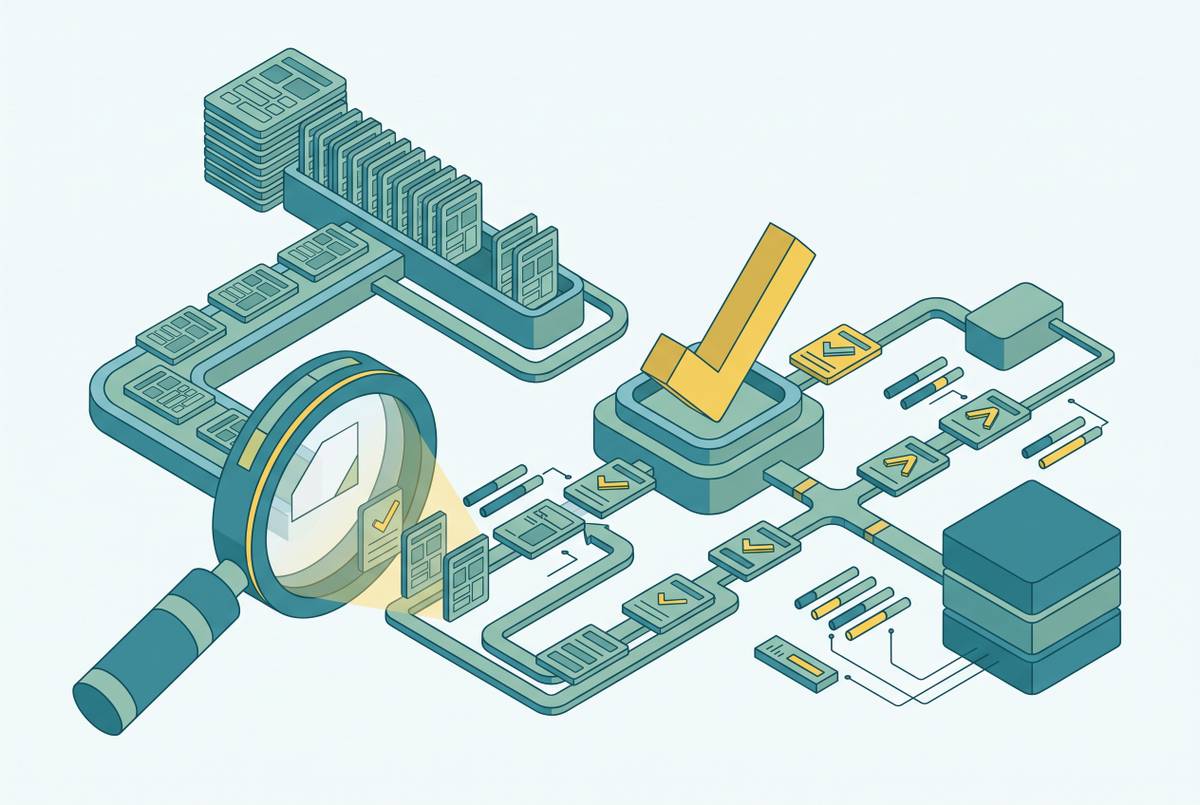
A fair objection to any continuous refresh model is that frequency does not help if the source feeding it is itself out of date. A data provider that refreshes its own database quarterly, or once a year, hands buyers a false sense of completeness, since a meaningful share of what lands in the CRM is already stale by the time it arrives. Check the provider's own refresh methodology before relying on it, and treat continuous or weekly refresh at the provider level as the standard to look for, especially for the volatile fields identified earlier, like title, email, and direct-dial phone.
The structural alternative is to stop treating the contact database as a fixed asset that gets cleaned up periodically and start treating it as a perishable portfolio that needs re-verification matched to how fast each piece of it actually moves. That reframing sets up a workable refresh cadence, the subject of the practical guidance in the next section.
A field-by-field refresh cadence calibrated to actual decay speed
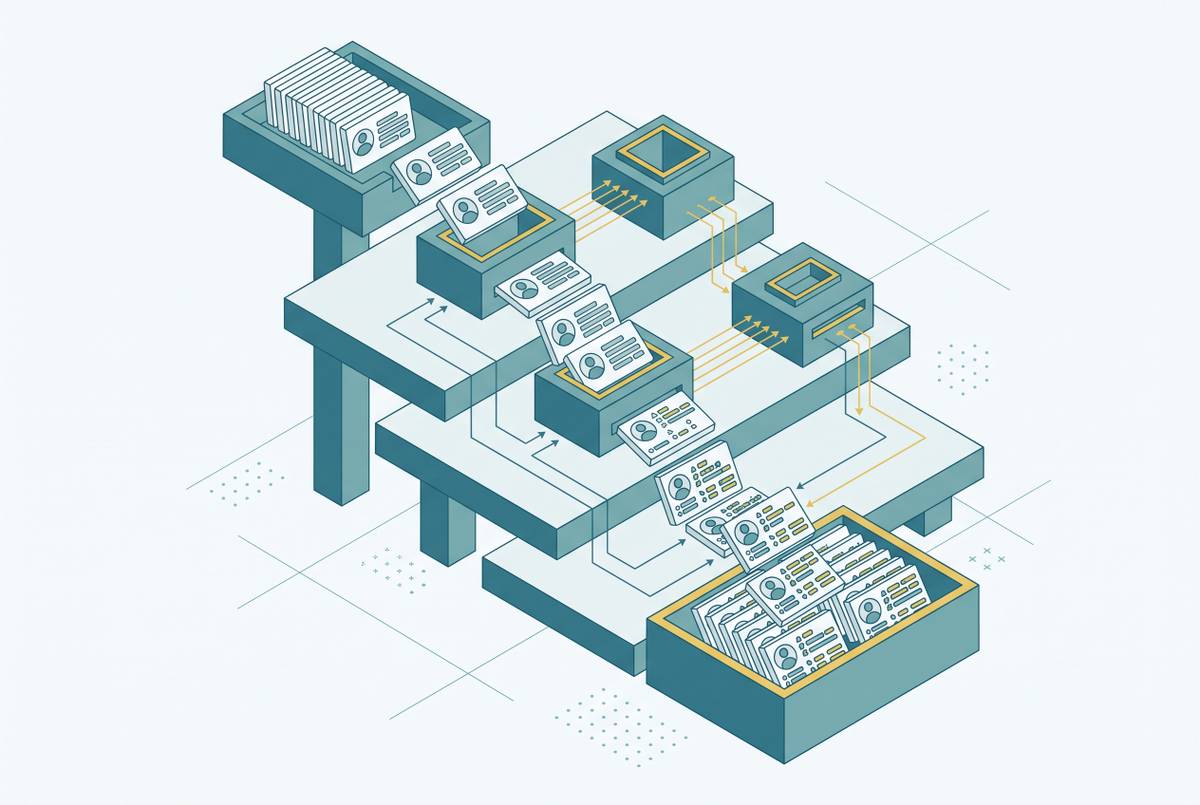
A workable refresh strategy starts with where a contact sits in the pipeline, since that determines how much it costs to leave a record stale. Apollo.io's 2026 guidance lays out a tiered structure built around this idea: active pipeline and hot leads should get refreshed every 15 to 30 days, since these are the contacts a deal actually depends on right now. Inbound leads need enrichment in real time, at the moment they enter the system, not after they have already sat in the CRM for a week picking up errors. Cold and archived contacts can run on a much looser six-month check, since the cost of a stale record there is low until the contact gets reactivated.
Layered on top of that pipeline tier, cadence also needs to track how fast each field itself moves. Employer and company fields should refresh on an event trigger, such as a job change, an acquisition, or a layoff announcement, rather than waiting for a fixed calendar date to roll around. Job title should get refreshed quarterly at a minimum, and immediately the moment a job-change signal appears. Business email needs verification at the moment of send plus monthly monitoring in between, since a verified address from three months ago is not a safe assumption heading into a major campaign. Direct-dial phone numbers should get checked before each dial and re-verified quarterly given how tightly they are tied to a single role. Mailing and office address can run on a semi-annual cycle, since it decays slowly enough that more frequent checks add little value.
Industry adds one more adjustment on top of all of this. Teams selling into startups, SaaS, and broader technology accounts should tighten every interval above, treating the field-type cadences as floors rather than targets, since high-turnover sectors will burn through those windows faster than slower-moving industries will. And the quality of the enrichment source matters as much as the schedule applied to it: a provider that refreshes its own database weekly or continuously delivers a materially different product than one refreshing quarterly, even when two buyers apply identical re-enrichment schedules on their own end. Checking a provider's refresh methodology belongs inside the cadence decision itself, not off to the side as a separate procurement step.
None of this produces a permanently clean database, and no framework should claim otherwise. Continuous enrichment from a reliable source narrows decay's impact without eliminating it, because the labor-market churn driving the whole problem is structural and outside any team's control. The realistic goal is a short window in which a bad record can sit undetected, not a static, permanently accurate asset. That is the standard a field-by-field cadence is built to meet.