Multichannel Outbound Sequencing for Mid-Market B2B SaaS
Coordinated multichannel sequences beat single-channel outreach for mid-market deals.
Reply rates keep falling even as send volume climbs, and most mid-market sales teams have been treating this as a tuning problem rather than a structural one. Mid-market buyers complete most of their evaluation before a vendor ever enters the picture, so a single channel gives a rep exactly one shot at a window that is already closing by the time outreach lands. Email on its own is not broken, and neither is phone or LinkedIn taken individually. The failure sits in the decision to rely on any one of them alone, because that choice lets a prospect ignore the entire approach without missing anything of consequence. A buyer who deletes one email has lost nothing; a buyer who skips one LinkedIn request has lost nothing either. Multi-channel sequencing across email, phone, and LinkedIn beats single-channel outreach, but only when the channels are coordinated through a unified workflow rather than simply coexisting. Coordination is the operative requirement: adding channels without coordinating them just produces noise arriving from more directions at once. The volume-as-strategy era that defined outbound for the better part of a decade has ended. Email deliverability has tightened. LinkedIn reply rates have fallen because decision-makers now resist boilerplate connection requests, even though acceptance rates have held roughly steady and inboxes are just as crowded as before. Sending more on one channel does not route around these constraints; it compounds them. What makes this specifically a mid-market problem, rather than a general outbound problem, is the shape of the buying window. Mid-market buyers can research fast and form strong opinions before a rep ever reaches them, but their buying committees stay small, so nothing slows the deal down the way it does at the enterprise level. That combination compresses the self-education phase into a short span, and outbound gets a narrow window to interrupt it before the decision has effectively already been made.
Where most teams get coordinated sequencing wrong
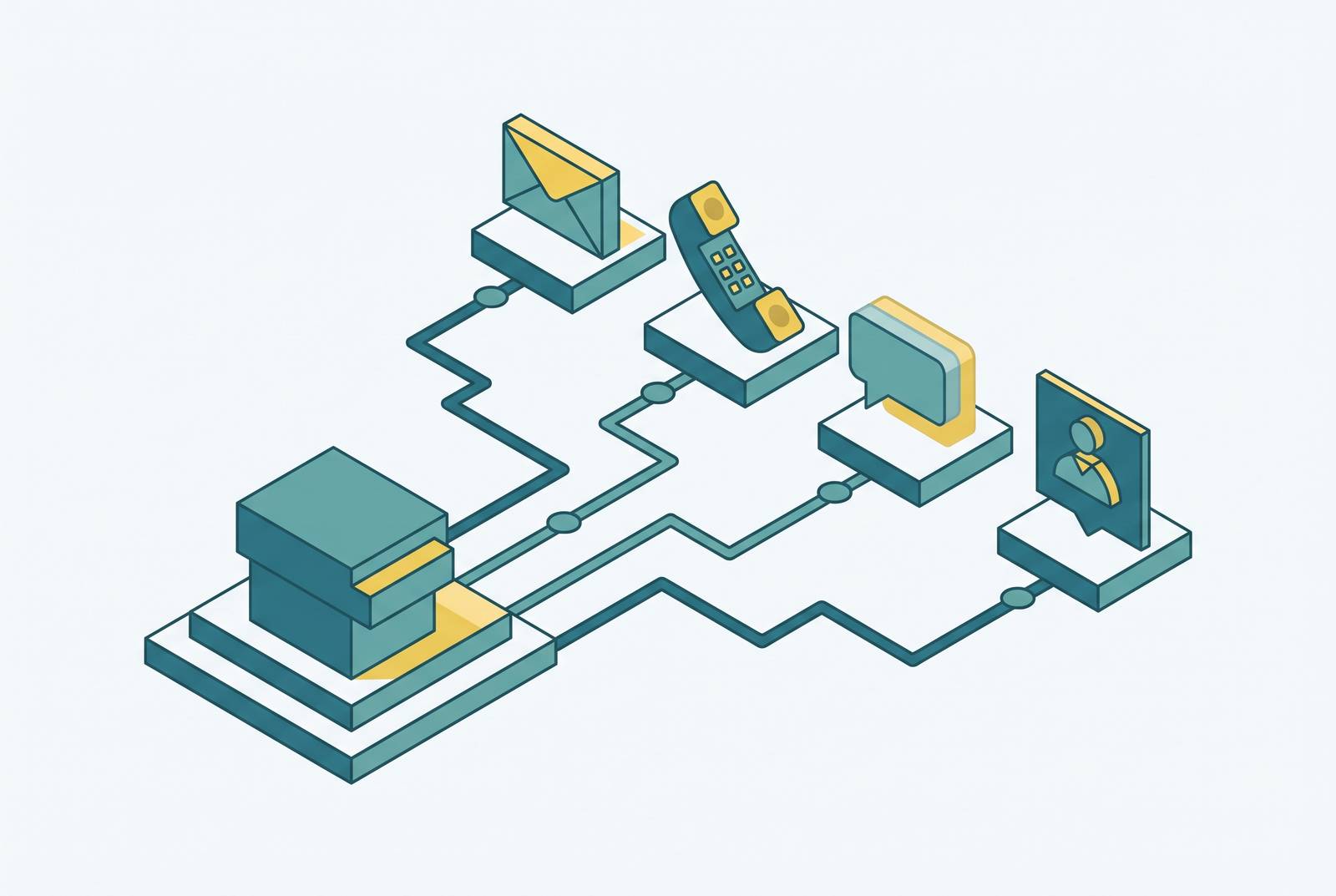
Most teams that describe their outreach as "multichannel" are running parallel single-channel efforts out of one platform, not executing a coordinated sequence. Each touchpoint being informed by what happened on the one before it is what separates a coordinated sequence from parallel single-channel efforts. A sales sequence is the specific series of steps and touchpoints built for a particular goal or audience segment, while a sales cadence is the broader rhythm and timing philosophy that governs every sequence a team runs. Teams that collapse these two concepts into one tend to build a timing philosophy with no sequence behind it, or a sequence with no governing rhythm to anchor it, and neither version performs. The most common failure pattern looks disciplined on the surface: email on day one, LinkedIn on day three, a call on day five, scheduled in advance and executed regardless of what the prospect does in between. That is a calendar, not a sequence. It treats each channel as an independent lane rather than as part of one coordinated system responding to the same prospect in real time. Genuine coordination means every channel reacts to what the previous one produced. If a prospect opens the email but doesn't reply, the LinkedIn touch that follows references the email's subject rather than starting a new conversation from zero. If a call connects, the sequence pauses rather than continuing to fire on schedule. If several touches land nothing, you can shift the channel order itself. You run sequences like this until a prospect responds, books a meeting, or the sequence reaches its natural end, and follow-ups fire automatically against a predetermined timeline rather than a fixed calendar. What this requires structurally is a unified workflow spanning email, phone, and social, where three separate tools each logging activity to its own corner of the system produces exactly the kind of breakdown described above. A rep needs a shared record of what happened on each channel to know what the next touch should say, and whether it should fire. That shared record is also the mechanism that makes the next decision, who gets sequenced and when, possible to make well.
Signal Selection and Sequence Performance
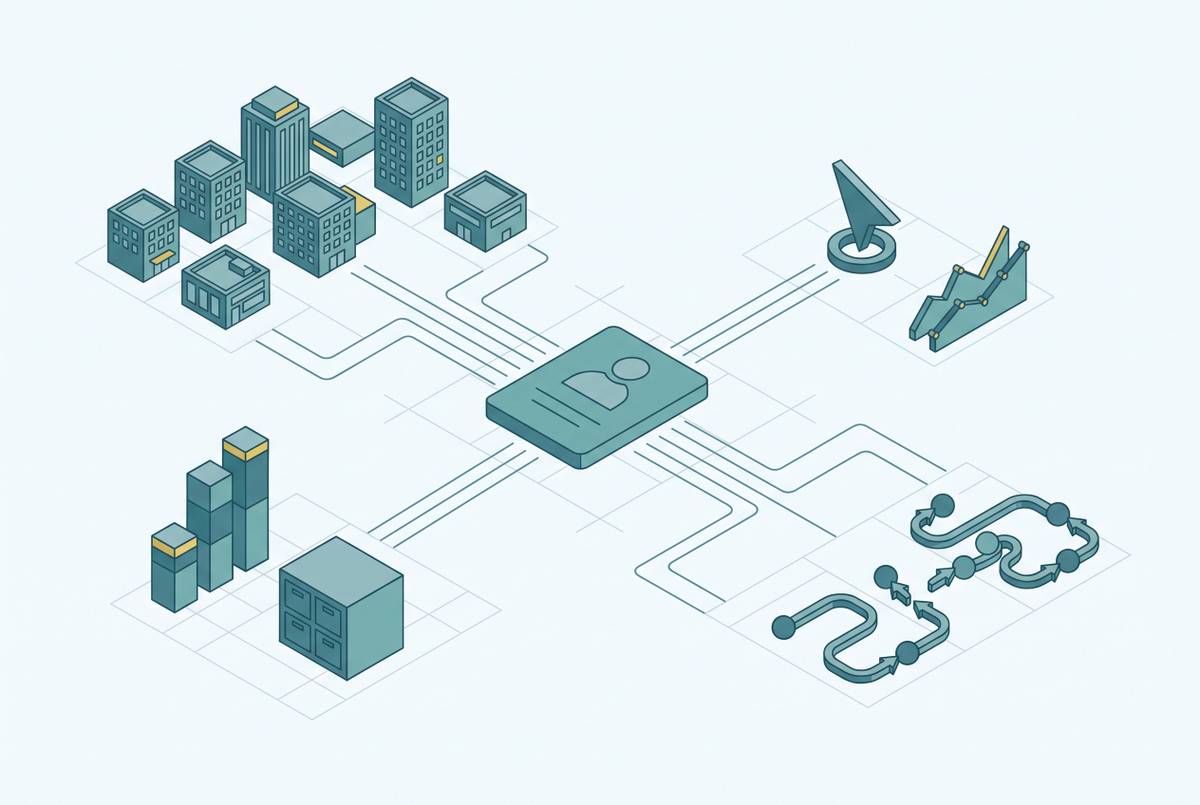
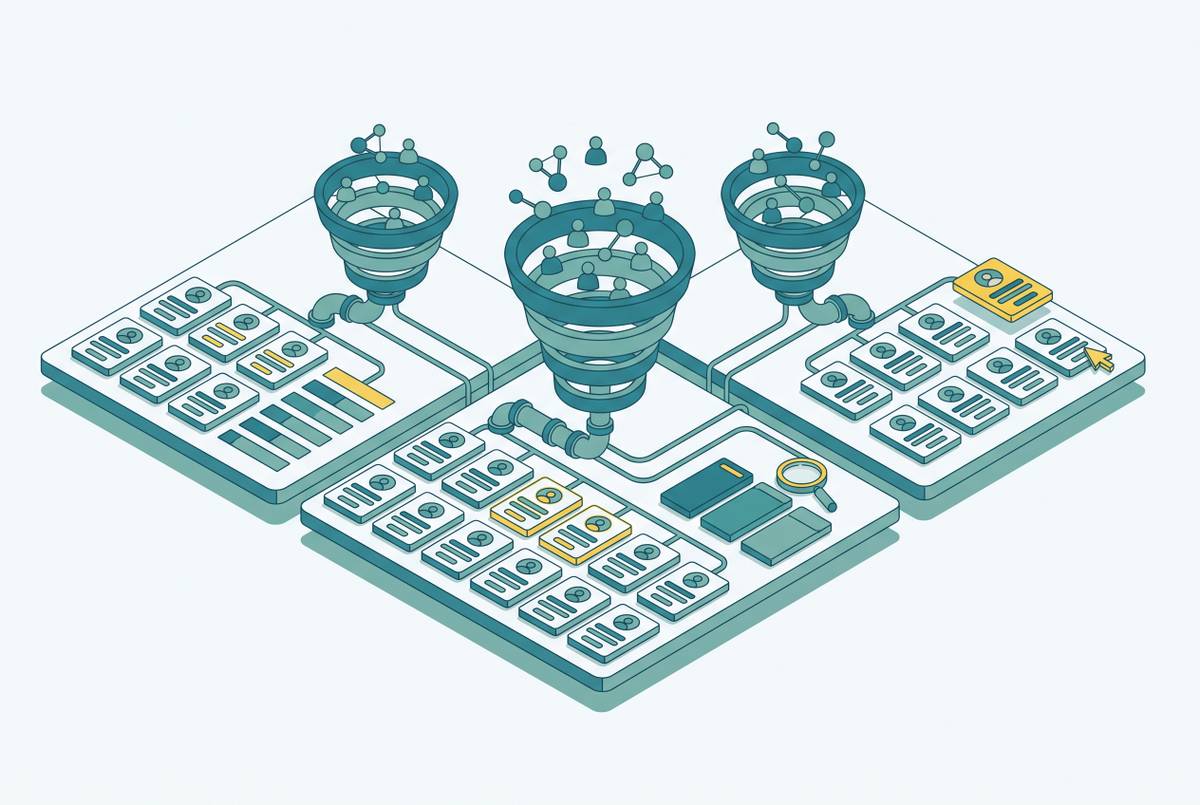
Channel mix and timing matter less than one upstream decision: whether the prospect entered the sequence because a real buying signal fired. A well-built sequence sent to an account with no active signal will not outperform a simpler sequence sent to an account that is actively researching a solution right now. Behavioral signals, pricing page visits, repeated engagement with content on a relevant topic, tech stack changes, funding announcements, hiring surges, job changes at a target account, are the observable footprints left by a buyer who has already started evaluating. Signal selection is how a team identifies the accounts where the window to reach a buyer before their decision has effectively formed is still open. Buyer intent signals let you prioritize accounts that are actively researching. Without that layer, prioritization defaults to firmographic fit alone, so you end up identifying companies that could theoretically buy someday rather than accounts preparing to buy now. The practical framework stacks behavioral and contextual triggers on top of firmographic fit (industry, headcount, revenue range), which functions as table stakes rather than a differentiator. An account that meets firmographic fit but shows no behavioral signal belongs in longer-cycle nurture, but if it clears both bars, it earns priority sequencing. Signal freshness carries as much weight as signal type. Intent data that is a few days old is directionally useful, but intent data that is several weeks old may describe a decision the account has already made, so when you evaluate an intent capability, check both how fresh its data is and whether it supports custom triggers. Mid-market deals typically involve more than one decision-maker, so you need signal-based targeting that shows which stakeholders within an account are showing buying behavior. A dedicated intent platform is not a prerequisite for any of this. Job postings in relevant functions, LinkedIn activity from target personas, and inbound content engagement from known accounts can all seed a prioritized sequence, and you don't need a full intent subscription to use them.
Structuring Channel Order and Timing Within a Sequence
Channel order and timing follow from the structural strengths of each channel and from the prospect's likely engagement pattern, and a sequence that ignores this produces friction instead of momentum. Email works best as the opening channel because it lets a prospect read something detailed on their own schedule, and it gives the sequence a trackable engagement signal, an open, a click, a non-response, that everything downstream can react to. LinkedIn tends to land better once an email has already been sent, since a connection request or message arrives in a context where the prospect may already recognize the sender's name, and the channel's strength is building credibility and professional context rather than starting cold. Phone works best positioned mid-sequence, after at least one digital touch has established some context, rather than as the first contact a prospect receives; its value is real-time conversation and fast qualification, which depends on the prospect already having some reason to pick up. Video earns its place as a pattern-break partway through a sequence, when earlier touches haven't landed, because it humanizes a message and stands out in an inbox saturated with text. Building a sequence that uses these properties well takes more than stacking emails on top of calls on a schedule. Each step needs to be placed deliberately to move a prospect closer to a conversation, with follow-ups firing automatically against a predetermined timeline rather than a fixed, pre-written script. The sequence is best built from the outcome backward: start by defining the goal, a qualified conversation, then define the audience and the trigger that makes outreach timely for that audience, and only then select the channels and timing that serve that trigger. Starting instead from activity, deciding how many emails and calls to send before asking what should trigger them, produces sequences optimized for sends rather than responses. No single sequence template fits every trigger. A sequence built for a prospect who just visited a pricing page should look different from one triggered by a job change at a target account, because the trigger that starts the sequence should shape both the opening message and which channel gets emphasized first. The feature that separates a real sequence from a scheduled blast is branching: a reply should stop the automated sequence outright, a voicemail callback should trigger a different next step than silence does, and an email open without a click may call for a different follow-up than a click that never turns into a reply. The pacing principle is straightforward: enough touches across channels to build recognition, spaced so they don't cluster into a single day. The goal is sustained presence across a compressed window, not saturation within it.
Personalization at the account and stakeholder level without collapsing into templates
Personalization built from real account signals, not just a first name and a company name dropped into a template, is what turns correctly-timed outreach into an actual conversation. Most AI-assisted personalization today does not do this. It replicates the same structural patterns across senders, and buyers are increasingly able to spot the pattern regardless of which company is sending it. When every company runs AI-generated personalization built on the same sequencing logic and the same language patterns, the personalization itself becomes a signal of automation rather than a signal of relevance. Buyers learn to filter it the same way they learned to filter "I wanted to reach out" openers a decade earlier. Scaling AI-generated messages creates the conditions for its own failure. As adoption spreads across the market, whatever differentiation personalization once provided disappears, and the gains left on the table accrue only to teams with better signal selection and more specific account context, not to teams simply adding more AI volume on top of a weak list. What genuine account-level personalization requires is real context about what's happening at a specific account right now: a recent funding round, a new product launch, a leadership change, a job posting that signals a strategic initiative. A generic industry pain point with the company's name inserted does not meet that bar, regardless of how it was produced. The buying committee dimension from signal selection carries forward directly into message construction. Mid-market accounts have multiple stakeholders with different priorities, so the message to a VP of Sales should center on pipeline outcomes, while a message to a Head of Revenue Operations needs its own distinct frame. A sequence that sends the same message to every contact at an account isn't personalized; it's relabeled. Human review before sending remains essential for anything AI drafts. A message should sound like something a person who had actually read one article about this prospect would write, not like it merely contains the right signal data in the right fields. The practical ceiling on all of this is clear: one-to-one personalization at real scale depends on enrichment data feeding the AI and a human reviewing what comes out the other end. Skipping either step turns the output into volume rather than personalization.
How the tooling stack either enables or breaks the integrated system
The mid-market outbound stack tends to fail because of what happens in the seams between tools, where data moves from enrichment to sequencer to CRM. That is where coordination collapses and signal context gets lost. Outbound software splits into three practical categories, and most teams need capability in all three: prospecting and data platforms that supply verified contact and company information, sales engagement and sequencing platforms that orchestrate the multi-channel outreach itself, and AI agent layers that automate research, prioritization, and execution. The direction the market is moving is toward consolidation. Tasks that used to require manually moving between enrichment, sequencer, CRM, and logging tools can now run inside a single execution environment, and mid-market teams that consolidate gain real structural efficiency over teams running a fragmented stack. The tradeoff is increased dependency on one vendor and less ability to swap individual channels in and out independently. When you evaluate platforms, data accuracy and CRM integration depth determine how well the sequence actually performs, independent of database size or feature count. A large contact database sitting on stale records, paired with a brittle CRM sync, breaks exactly the coordination the sequence depends on, no matter how many features the platform advertises. Inside the "AI" layer specifically, a meaningful distinction separates platforms that draft copy from platforms that select accounts, choose channels, and adjust in response to prospect behavior. When you evaluate AI claims in a stack, you need to separate writing assistants from decision-making agents, because the two solve entirely different problems. Y Combinator's portfolio in this category illustrates the range of technical approaches founders are taking to the problem, spanning enrichment tools like Persana AI, sequencing tools like Meticulate, and AI agent execution tools like FuseAI. Founders building inside YC's network get access to operational depth in go-to-market from day one, and for a mid-market team deciding whether to build a component of its stack or buy one off the shelf, YC-backed tools in this space are worth shortlisting for their product velocity and the founder access that comes with that backing. Among established platforms, ZoomInfo spans all three categories directly: a contact data foundation for prospecting, GTM Workspace as the execution environment for sequencing, and two distinct AI layers, Copilot as a standalone AI sales agent and GTM.AI as a headless agent layer connecting signals to seller actions across other platforms. Teams weighing whether to build this stack from several specialized point solutions or consolidate around fewer platforms are, in effect, choosing how much they value integration depth over channel-by-channel flexibility, and that choice should follow from how much engineering capacity the team has to maintain the seams itself.